


A Climate Strategy Rooted in People
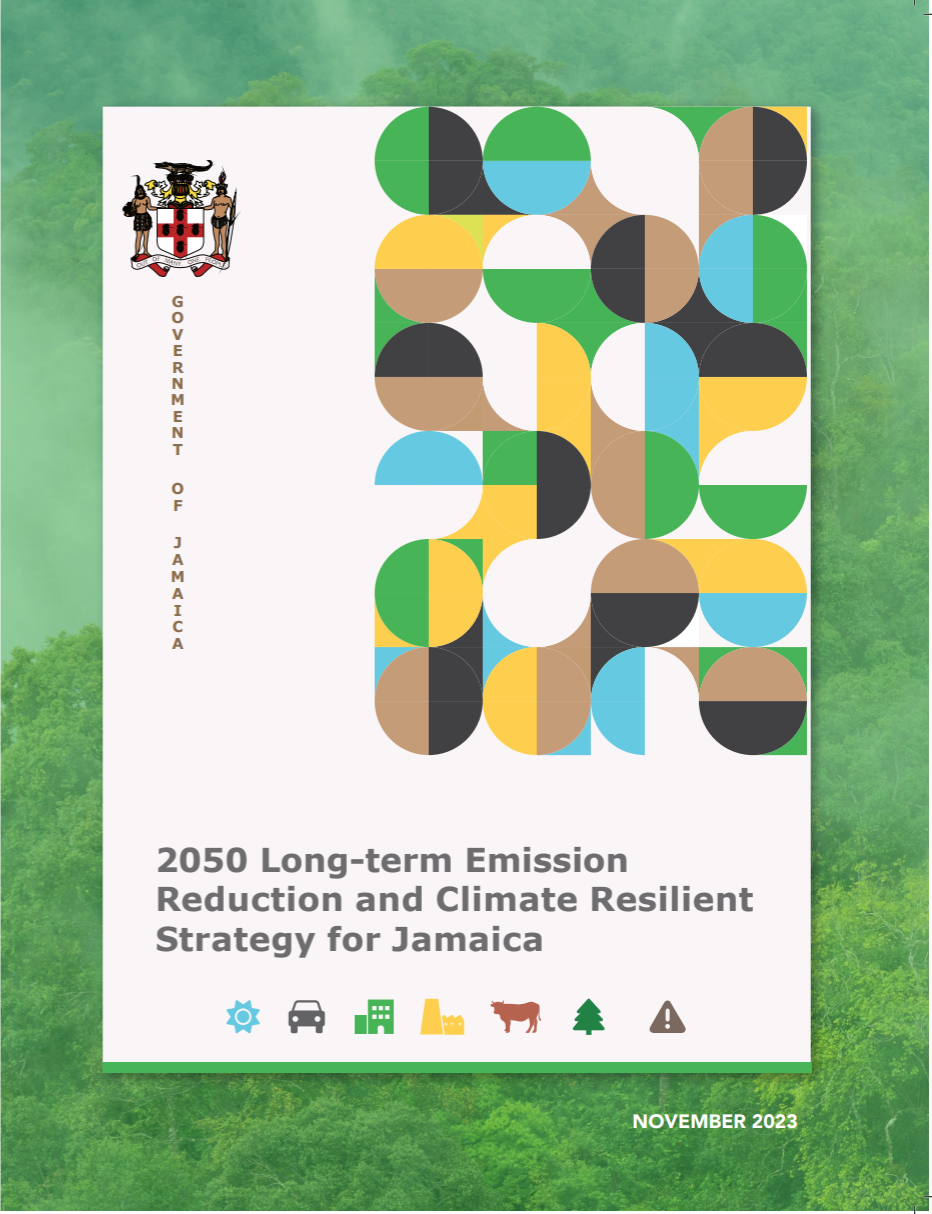
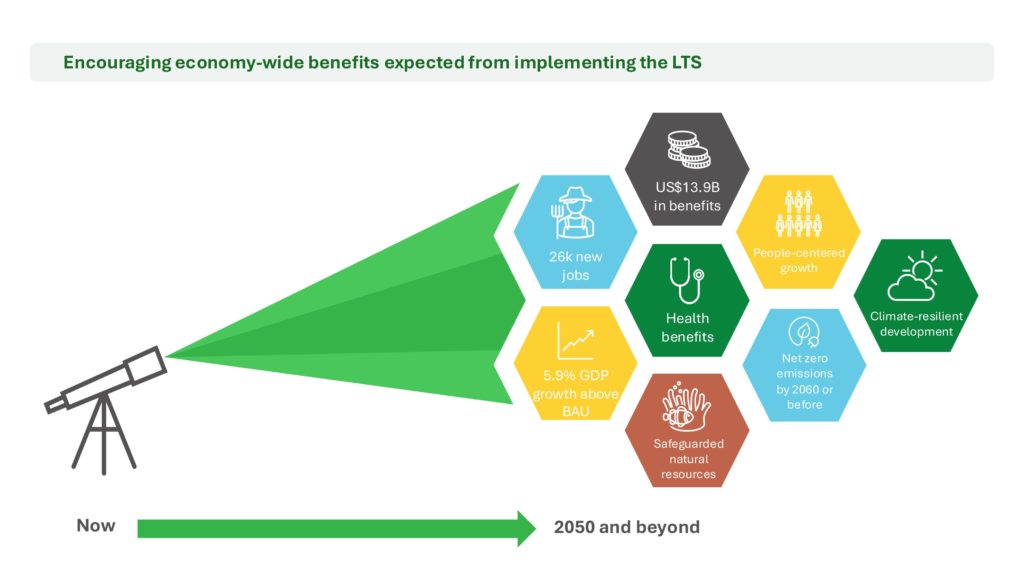
Jamaica has charted a bold new course for its future: a Long-Term Emission Reduction and Climate Resilient Strategy (LTS) that tackles climate change while protecting its people and economy. The strategy promises USD 13.9 billion in net benefits by 2050, the creation of 26,000 new jobs, and a pathway to net-zero emissions by 2060 or earlier.
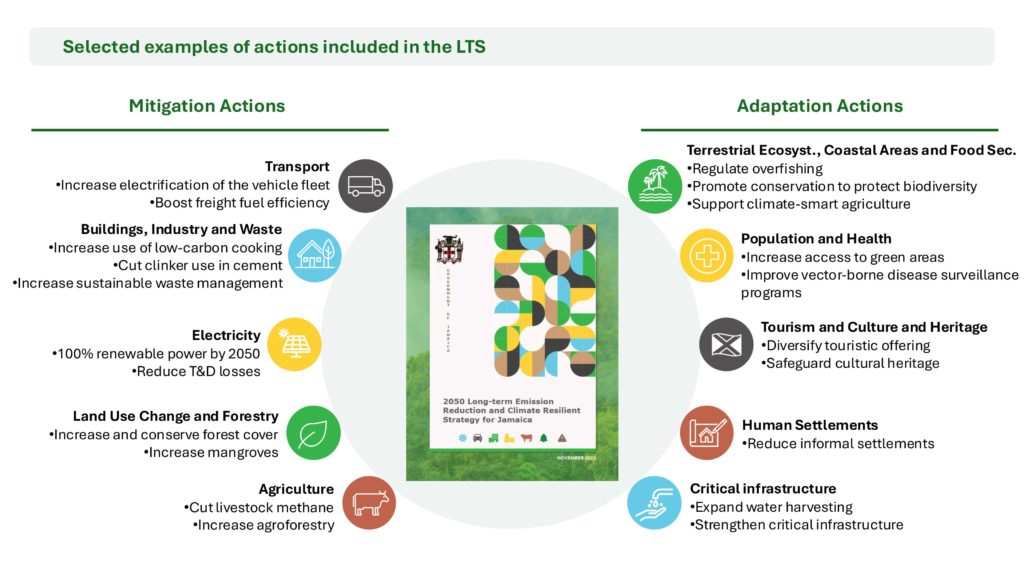
But the LTS is about more than numbers. It strengthens resilience where Jamaicans feel climate change most—from safeguarding food security and coastal communities to protecting health, cultural heritage, and critical infrastructure. By 2050, Jamaica aims to cut emissions 73% below 2020 levels while making its economy and society better able to withstand hurricanes, rising seas, and droughts.
The message is clear: Jamaica is showing that climate action can create prosperity, reduce risks, and secure a safer future for generations to come.
Built Together, Built to Last
The LTS and complementing analysis was developed under the leadership of the Climate Change Branch (CCB), formerly in the Ministry of Economic Growth and Job Creation, in collaboration with the 2050 Pathways Platform. The initiative was funded through the German Government’s International Climate Initiative (IKI) and implemented by Climate Analytics. It is anchored in national priorities, including Vision 2030, Jamaica’s development plan, and reaffirms the country’s commitment to the Paris Agreement.
Crucially, the Strategy was shaped through a highly participatory process. Voices from a wide array of government, civil society, academia, and the private sector entities helped design a strategy that reflects Jamaica’s culture, priorities, and aspirations. Beyond bilateral engagements, many of these stakeholders were also engaged through eight (8) consultations workshops. This ownership makes the LTS not just a strategy, but a national commitment.
In August 2025, following approval from its Cabinet, Jamaica submitted its LTS to the United Nations Framework Convention on Climate Change (UNFCCC), fulfilling the requirement under Article 4.19 of the Paris Agreement. Already integrated into the country’s upcoming updated Nationally Determined Contribution (NDC 3.0), the LTS signals to citizens, investors, and development partners that Jamaica has a credible and coherent long-term strategy for a low-emission and climate-resilient future – and action is already underway.
Evidence That Ambition Pays
To understand the implications of its strategy’s implementation, Jamaica commissioned a Cost-Benefit Analysis (CBA), with support from 2050PP and carried out by Climate Lead Group (CLG), the University of the West Indies (UWI Mona Campus), and the French International Centre for Research on Environment and Development (CIRED).
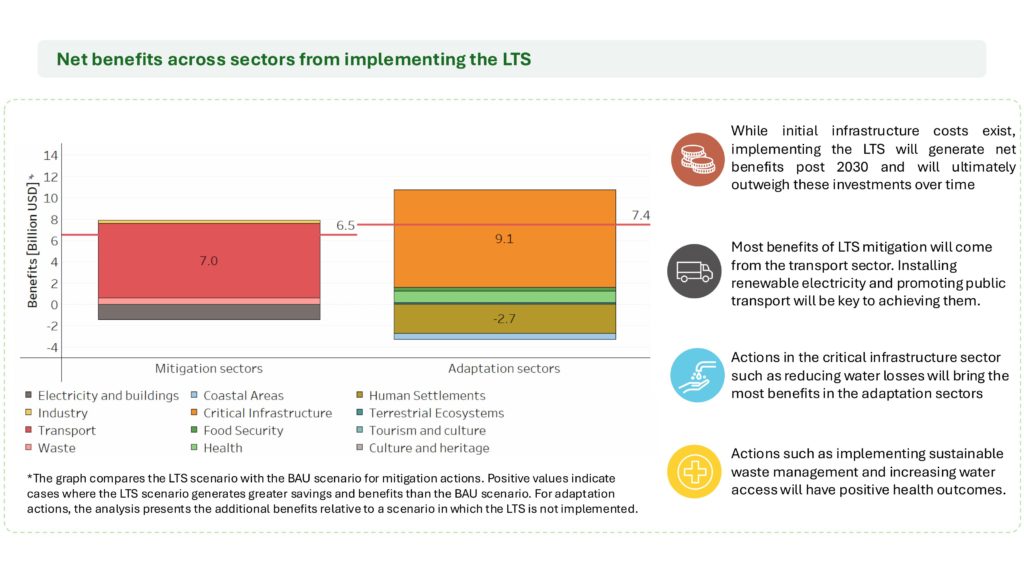
The findings are striking. Cleaner energy, electrification, and efficiency measures could deliver at least 6.5 billion USD in savings by cutting fossil fuel imports and vehicle maintenance costs, while also improving public health through cleaner air and modal shifts in transportation. Investments in resilience—strengthening agriculture, protecting coasts, and upgrading infrastructure—could bring even greater benefits valued around 7.4 billion USD by reducing losses and damages from extreme events and safeguarding lives and livelihoods. Taken together, the analysis shows that Jamaica’s LTS is not only environmentally sound, but also a powerful engine of economic growth and social progress.
From Strategy to Action
Ambition must be matched with delivery.
Alongside the LTS, Jamaica developed an Investment Plan, supported by UNDP, mapping out financing needs, institutional arrangements, and priority actions through 2050. This framework provides the foundation for aligning public and private resources and for mobilizing international support.
To build on this foundation, Jamaica is now updating its LTS operationalization plan —a practical guide to help navigate the next steps for advancing implementation of the LTS in line with the country’s NDC. This will be critical for turning long-term vision into action now.
Redefining Climate Leadership
By linking climate ambition with national development, Jamaica is setting an example for other small island states and beyond. Its LTS shows that climate strategies can be people-centred, evidence-based, and economically sound.
When Jamaica set out to sharpen its Long-Term Strategy, the government submitted a request through the NDC Partnership’s Global Call for NDC 3.0 & LT-LEDS. Partners responded and came together to provide the support needed to strengthen the evidence and financing foundations of the LTS, making it ambitious, robust, and actionable.
Jamaica’s LTS process showcases collaboration at its best. The NDC Partnership Support Unit, 2050 Pathways Platform, UNDP, and Climate Analytics worked hand in hand to align expertise and support, while the technical teams from CLG, UWI, CIRED, and Deloitte provided essential analytical inputs and process guidance. Together, these efforts reinforced national ownership and strengthened Jamaica’s long-term climate planning.
The next stage of Jamaica’s leadership will focus on three priorities:
1. Mobilizing finance from public and private sources.
2. Strengthening institutions to deliver and track progress.
3. Scaling up investment-ready projects that accelerate resilience and low-carbon growth.
With a clear strategy, proven benefits, and broad national ownership, Jamaica is redefining what climate leadership looks like—transforming climate action into a pathway to prosperity and resilience for its people.
Contributing authors:
- Omar Alcock, Climate Change Branch (CCB) of Jamaica’s Ministry of Water, Environment and Climate Change
- Taneque Heslop, NDC Partnership In-Country Facilitator embedded in the Climate Change Branch (CCB) of Jamaica’s Ministry of Water, Environment and Climate Change
- Marcela Jaramillo, 2050 Pathways Platform
- Viktoria Dimitrova, 2050 Pathways Platform
- Jam Angulo-Paniagua, Climate Lead Group
- Dane Armstrong, NDC Partnership Support Unit
Sorry, the comment form is closed at this time.